

The Goddness Nava Durga’s Life Cycle comes to an end Today. Until Gathamuga Chare, all of Nepal’s deities had resided beneath the water, not on the land, from the day of Bhagasti. Bhagasti is also known as Bhalabhala Astami. A Nava Durga Gana member wanders about the city, offering Pasuka to all of Bhaktapur‘s followers in order to keep them safe while they are away from the city. The biggest example of this form of storytelling is Navadurga Dev Gana Nach, which has been conducted in Bhaktapur every year since the 14th Century.
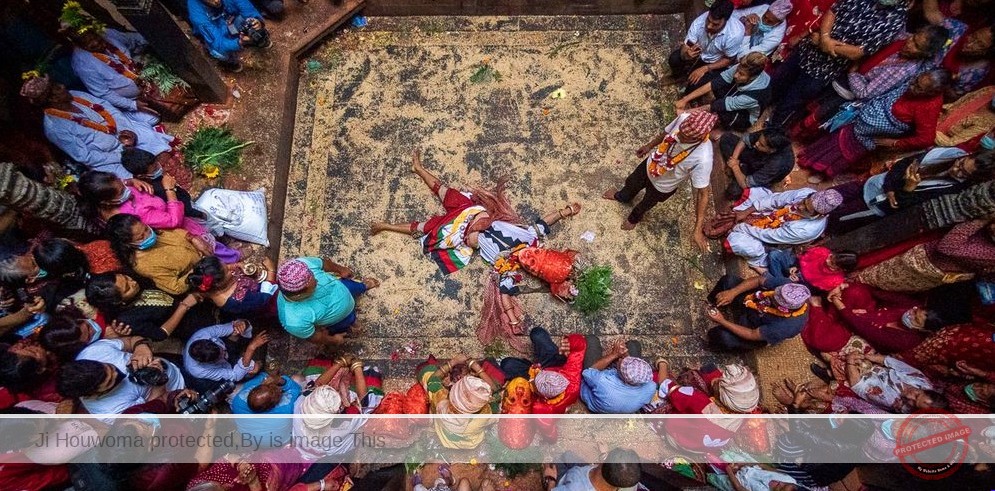
Although the majority of people have heard of it, only a small proportion of the public is aware of it. Every year on Bhagasti, the Navadurga Dev Gana is slain by burying masks in a rite (Bhalbhal Ashtami).
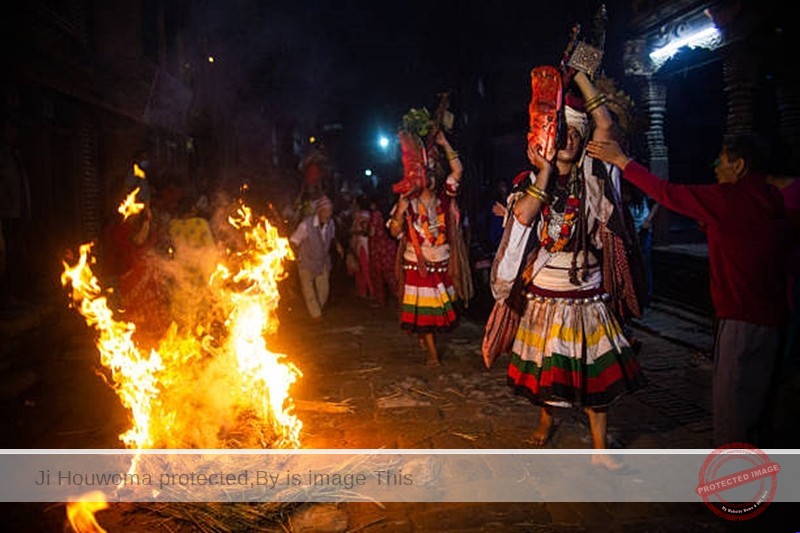

A ‘Life Line’ containing a ‘life line’ of Navdurga Gana of Bhaktapur is terminating on Bhalbhal Ashtami, i.e. on Tuesday, after approximately 11 Months of cultural manifestation. This year’s Nava Durga dance will culminate in the immersion of Nava Durga Gana‘s Masks at Brahmayani.
On Ghantakarna Chaturdashi, the deity is said to enter the Masks worn by Navadurga Gana. In addition, it is thought that the person who wears the Mask will get supernatural abilities.
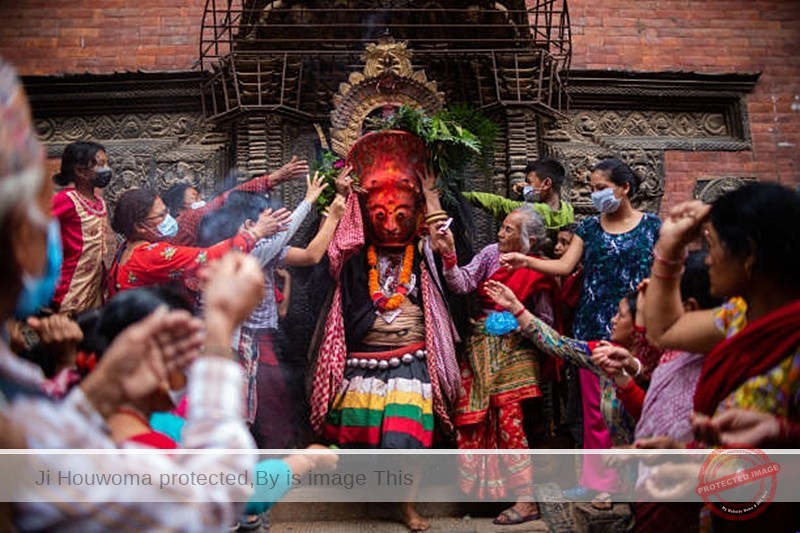 A total of 13 Artists, including 12 Masked Deities, have already taken part in the Navadurga Dance. Bhairav (Kalbhairav), Mahakali, Barhi, Brahmayani, Maheshwari, Kumari, Bhadrakali, Indrayani, Ganesh, Mahadev, Shweta Bhairava, and Singh Dumha (Nandi-Bhringi) are among the 13 characters who may be involved in this dance.
From Asar Krishna Ashtami, i.e. Bhalbhal Ashtami, through Shravan Shukla Chaturdashi, the artists collaborating in the dance come from the same Navdurga Gana.
The Navadurga Naach finish rite on the day of Bhalbhal Ashtami (Final Week) is a tradition-bound ritual. According to experts, no scriptures are mentioned.
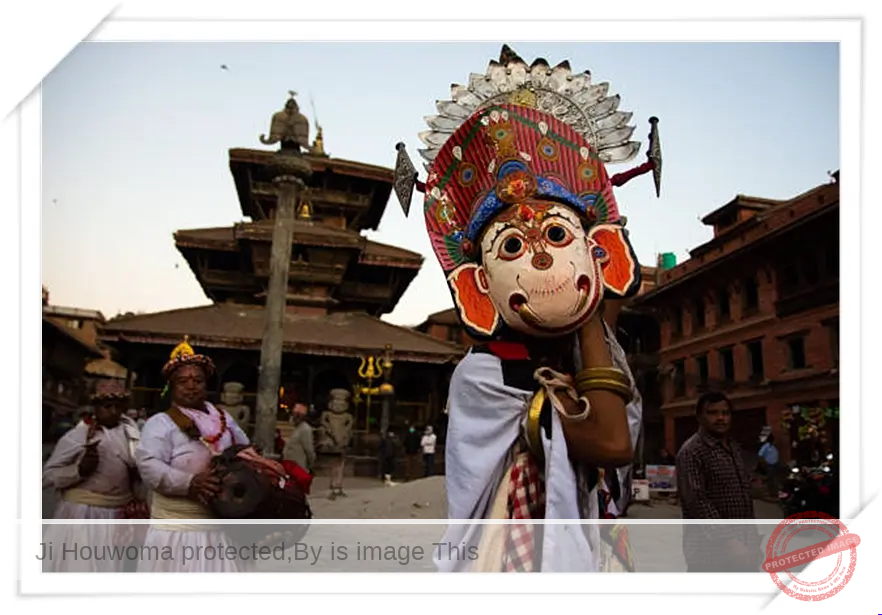
Bhagasti(Bhalbhal Ashtami ), the death day of the NavaDurga deities
On the day of Bhalbhal Ashtami, the river in Bhaktapur was inundated, washing away any debris that had accumulated along the riverbank. “It is believed that the faster a river rushes, the purer it becomes,”. explaining why the Hanumante River was chosen for the rite. The word ‘Bhalbhal‘ comes from Sanskrit. Bhalbhal Ashthami is said to be a reference to the loud noise water produces when flowing through a river.

The day is known as ‘Bhagashthi’ in the Newa community. This is Bhalbhal Ashthami, which is a combination of the words ‘Bhalbhal’ and ‘Ashtami.’
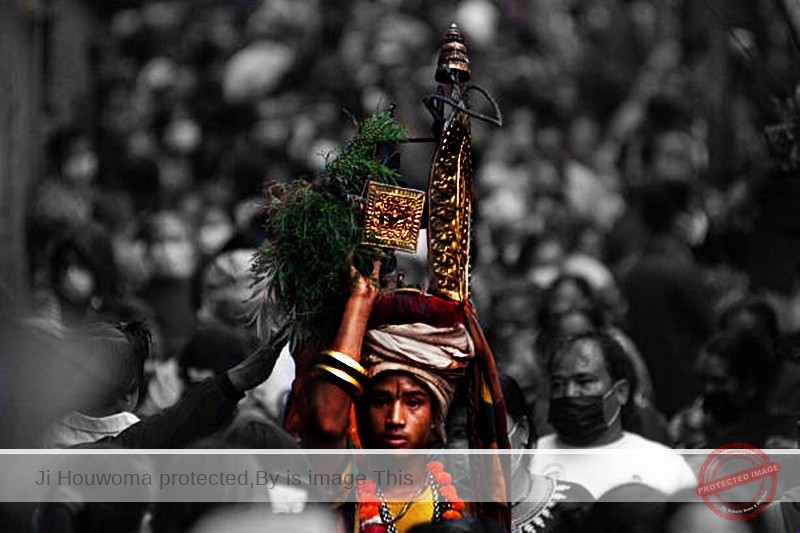
In Ichchhu Tole, the final Navadurga Naach is conducted on the day of Jestha Shukla Shashthi or Sithi Nakha. It is common to do the Mantra-Karma (Ritual) of first wearing the Mask and then returning the Masks on the same day, as per the procedures. The Jewels on them, however, are not destroyed.
Devotees believe that as the Navadurga Gana members return the chant, the supernatural powers fade away from the masks. The mantra is returned to Ichchhu Tole after their final dance, as per the tradition. However, because returning the mantra is impossible, they instead repay karma. When karma is repaid, they are destroyed, much as when one lends a face and life to an idol to make it a deity. “From Sithi Nakha to Bhalbhal Ashtami, there is no ritual done.”

As a result, it is usual to bring Navadurga’s lifetime to a close on the day of Bhagashthi, which began on the day of Gathemangal.
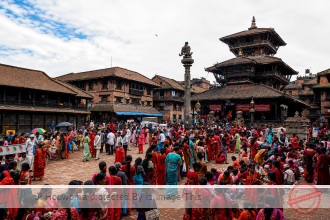
Before the concluding ceremonies on Bhalbhal Ashtami, all members of Navadurga Gana go around the city once in the Rhythm of Gana Baja (orchestra of local musical instruments). This day’s rhythm is distinct from those of previous days.
The group’s members live in Dyo Chhen (the house of the gods). It is thought that during their 11-month stay, all devotees should visit the Devi temple at least once.
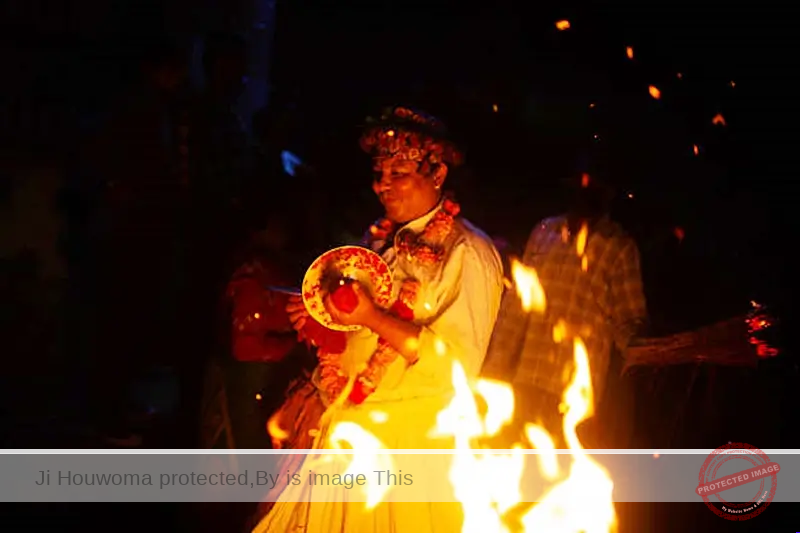
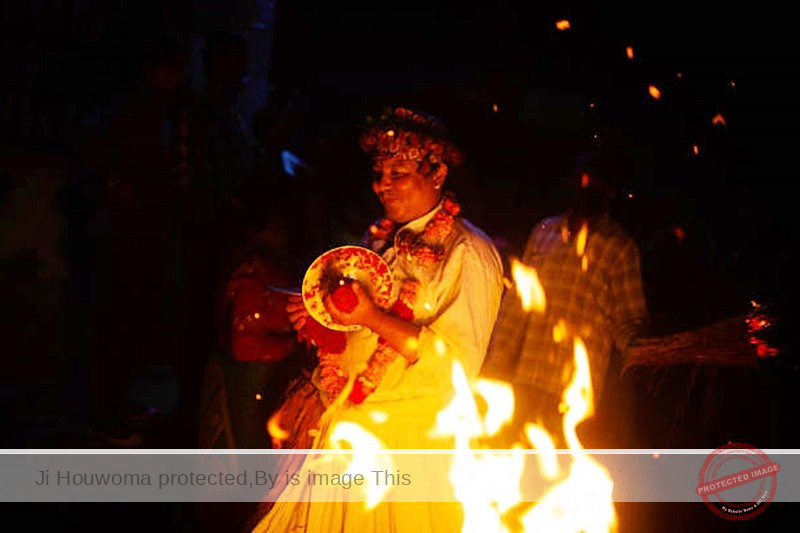
In Dyo Chhen , there is a silver idol of the goddess Mahalakshmi. A Kalash (Ceremonial Pot) is usually kept behind the idol. The Navadurga Gana’s karma is formally completed after the pot is immersed at Hanuman Ghat. A fish is also thought to be housed in a pot with its own meaning. That the body is absorbed in Panchatatva in the same way that a fish disappears into the water (the five essential elements of the world). At the same moment, the Devagans’ masks are burned, as if they were human death rituals. The person wearing the Bhairav mask administers Dagbatti (Funeral Pyre) to all 12 Masks and performs other final rites among the Devaganas. Their jewelry and clothing, however, are not consumed. The Devganas are not permitted to enter Dyo Chhen after this.
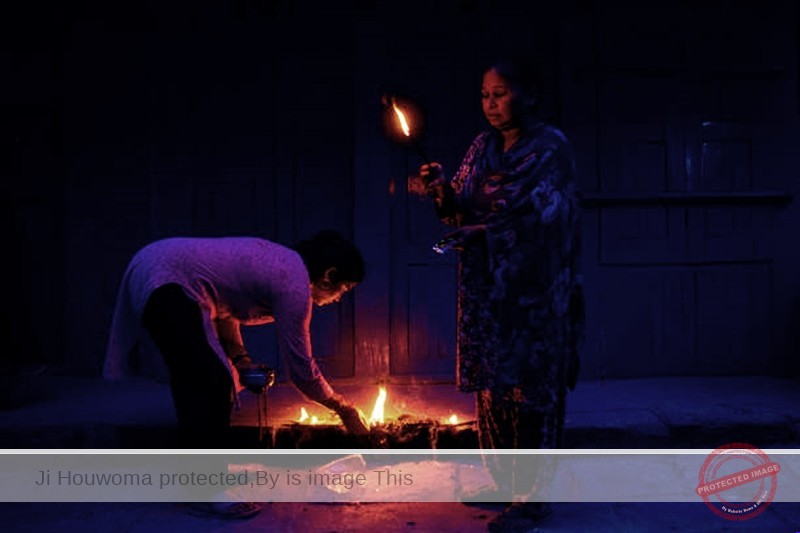
Every year, Navadurga Devagans take on new roles in the dance. The person who uses tantric methodology to remove the pot of adoration from Navadurga is said to die within six months. When the Navadurga Devagans discovered someone with the first 32 indications, they would leave the house and demand his clothes. In the one who asked for clothes, 32 indicators were present. The Navadurga devagans, on the other hand, are said to have gone out looking for another person if the garments had not been delivered. Customization is no longer an option.

Along with Bhaktapur, Kirtipur’s Baghbhairav Naach, Kathmandu’s Pachali Bhairav 12 year old Khadga Siddhi Naach, and Bhadrakali’s 12 year old Naach, which is done once every 12 years, are all completed on this date. It is traditional in the Newa community to sing the praises of Ganga Mai as “Shri Ganga Mai Nirmal..” from this day forward. It is also said that on Ashtami day, it rains.