

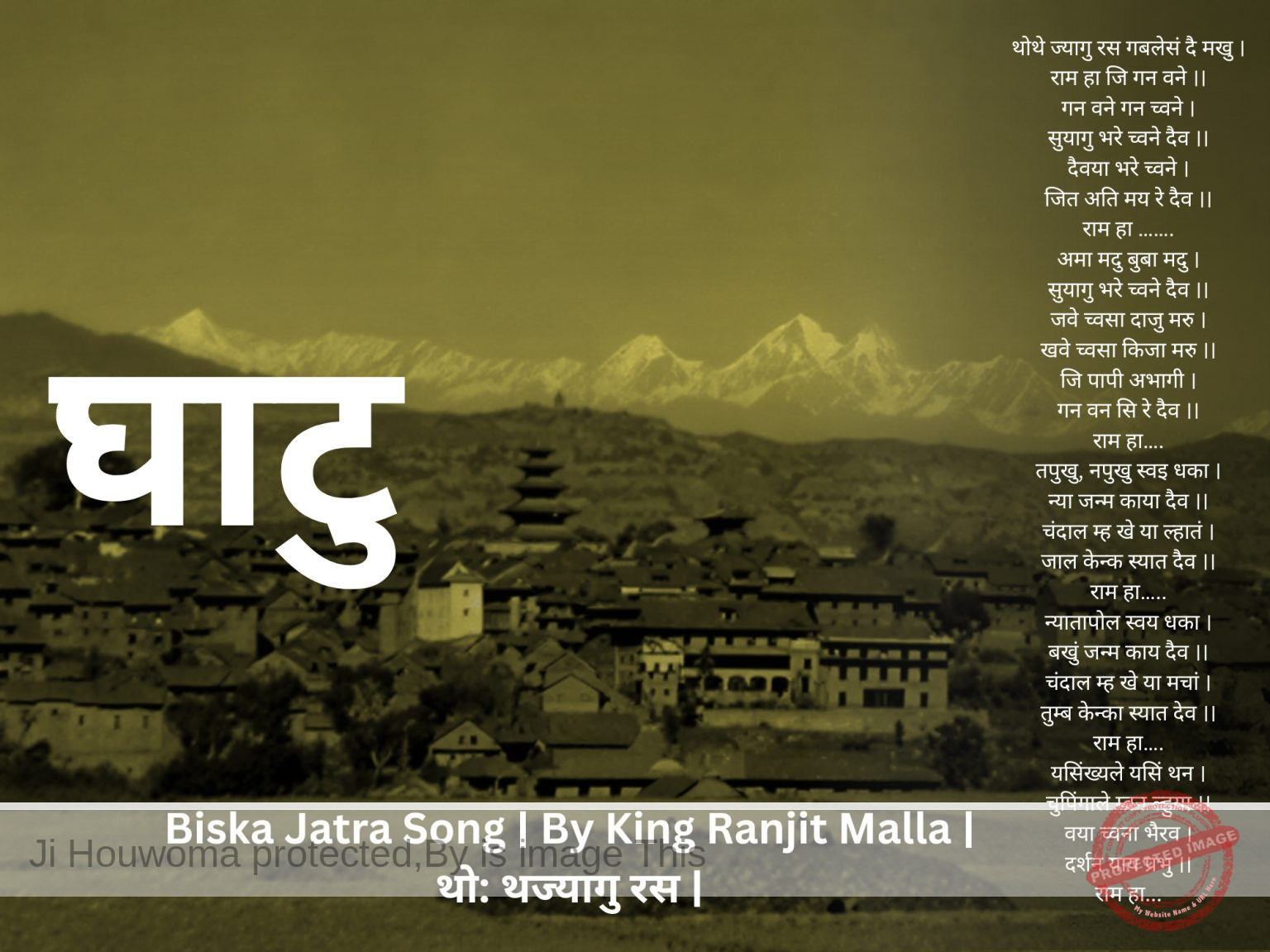
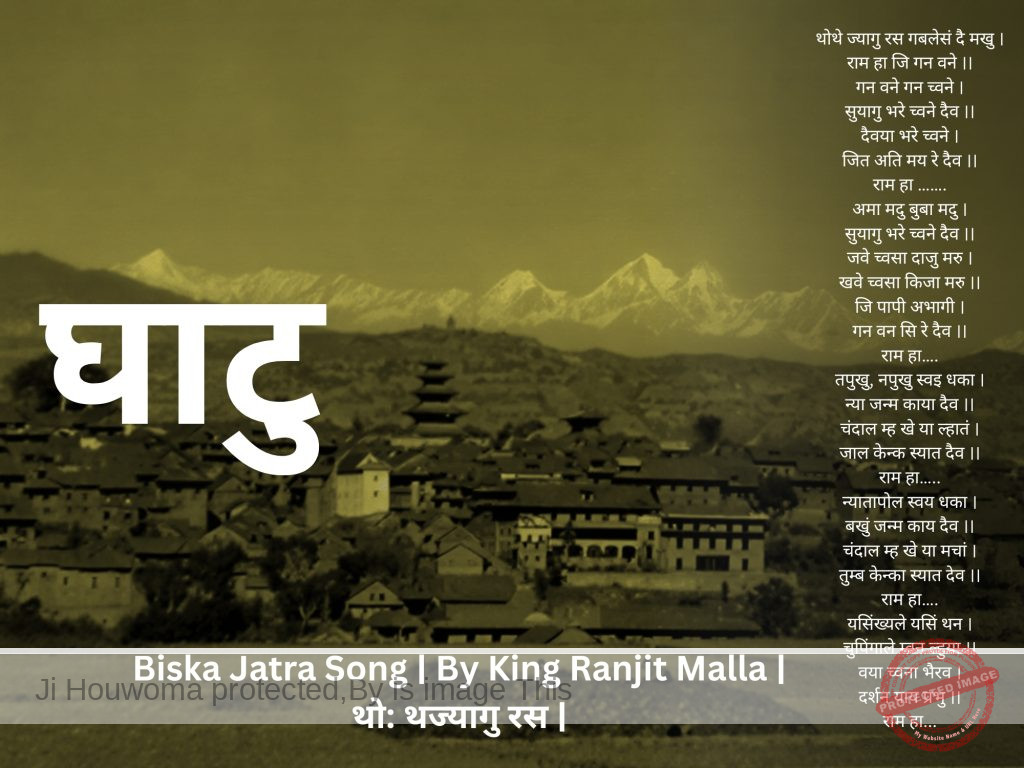
Biska Jatra Song | By King Ranjit Malla | थो: थज्यागु रस |
The final piece by King Ranjit Malla
Following Prithvi Narayan Shah’s conquest of the valley in 1826 AD, Ranjit Malla, the Last King of Bhaktapur, wrote this poem. He was banished from the nation after expressing his wish to visit Kashi. As he was departing his homeland, he took one final glance at it while sitting on Chandragiri Danda.
थोथे ज्यागु रस गबलेसं दै मखु ।
राम हा जि गन वने ।।
गन वने गन च्वने ।
सुयागु भरे च्वने दैव ।।
दैवया भरे च्वने ।
जित अति मय रे दैव ।।
राम हा …….
अमा मदु बुबा मदु ।
सुयागु भरे च्वने दैव ।।
जवे च्वसा दाजु मरु ।
खवे च्वसा किजा मरु ।।
जि पापी अभागी ।
गन वन सि रे दैव ।।
राम हा….
तपुखु, नपुखु स्वइ धका ।
न्या जन्म काया दैव ।।
चंदाल म्ह खे या ल्हातं ।
जाल केन्क स्यात दैव ।।
राम हा…..
न्यातापोल स्वय धका ।
बखुं जन्म काय दैव ।।
चंदाल म्ह खे या मचां ।
तुम्ब केन्का स्यात देव ।।
राम हा….
यसिंख्यले यसिं थन ।
चुपिंगाले म्वन ल्हुया ।।
वया च्वना भैरव ।
दर्शन याय प्रभु ।।
राम हा…
Translated In English
There will never be such a juice.
Where am I going to Ram?
Where to go and where to stay.
Whose fill of God lives ।।
I will be filled with the divine.
I am very sorry, O God.
Ram Ha…….
No mother, no father.
Whose fill of God lives ।।
There is no brother who writes.
There is no brother who writes on the left.
I am a sinner unlucky.
Where did you go, O God?
Ram Ha.
Lapukhu, Napukhu will look.
The god of fish birth
The hands of the sandal body.
The god killed the trap kenk.
Ram Ha.
I wanted to see the fish.
The god who gave birth to a bird ।।
Sandalwood body is the child of Khe.
Tomb Kenka killed Dev
Ram Ha.
Yasinkhyale Yasin here.
Chupingale bathed.
Bhairava is sitting there.
Darshan Yaya Lord ।।
Ram ha
An overview of the Ghatu song:
In the Kathmandu Valley, “Ghatu” (also known as “Ghatu Pahachare”) is a deeply moving Newa folk song that is typically sung during significant celebrations like Pahachare and Biska Jatra. This song is a profound depiction of history, culture, and feelings in addition to being enjoyable.
The Ghatu song is primarily connected to the sad demise of the Malla dynasty in Bhaktapur. The song’s lyrics powerfully capture King Ranjit Malla‘s anguish, estrangement, and emotional state when he fled his realm following Prithvi Narayan Shah’s victory. Through musical techniques, it has preserved a delicate historical moment.
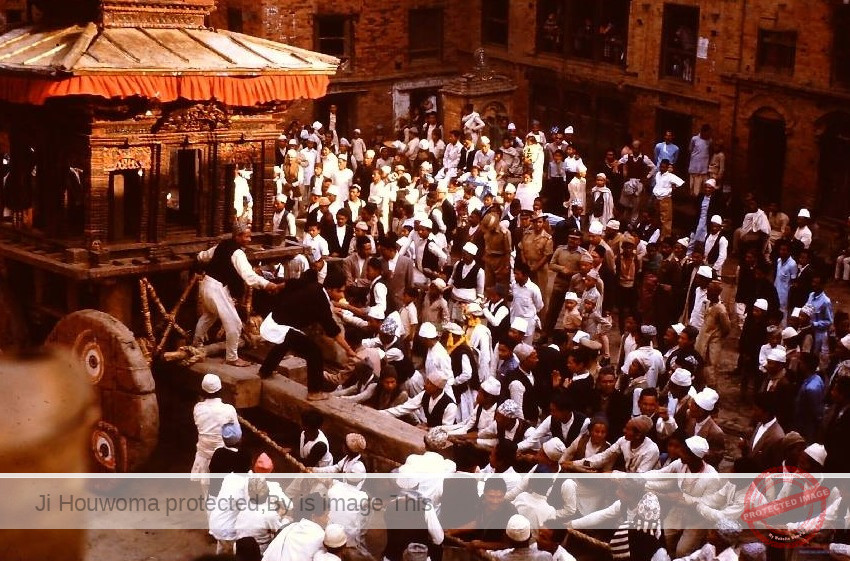
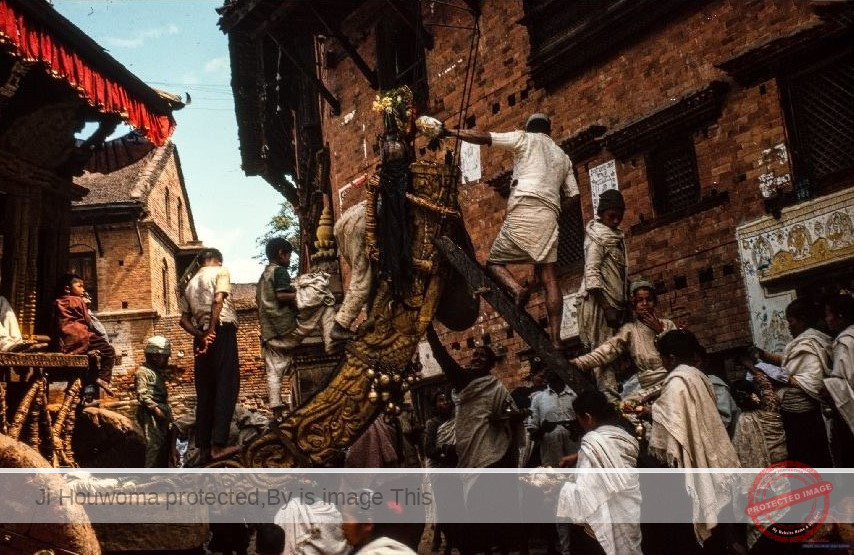
Ghatu Geet and Biska Jatra have a long-standing and profound relationship. Biska Jatra is a celebration of Bhaktapur’s whole cultural expression, with music, dancing, and traditional performances all playing significant roles. It is more than just a chariot-pulling event. Ghatu Geet has a custom of being sung and performed especially in this setting.
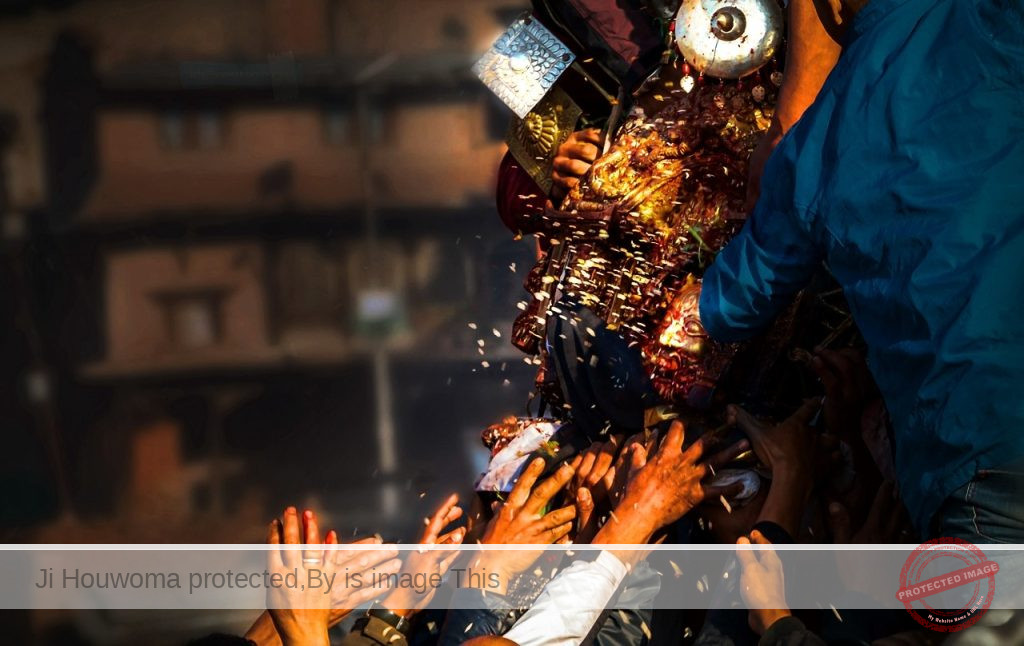
The Ghatu song, which combines love, devotion, and separation, gives the festival’s excitement a profoundly emotional depth. At different points during the event, different musical groups play and sing this song, carrying on the tradition.
Therefore, Ghatu Geet is like the musical soul of Biska Jatra—which makes the festival not only visually, but also emotionally and culturally complete.